Bryan Johnson's Sleep Protocol: The Real Answer (2026)
Bryan Johnson says he's the best sleeper on Earth: 8:30pm bedtime, no alarm, months of perfect Whoop scores. Here's the actual protocol behind the claim.

Bryan Johnson claims to be the best sleeper on Earth, and unlike most longevity-world claims, he publishes receipts: months of perfect scores, a bedtime that hasn’t moved in years. Next to his 8:30pm lights-out, even Lex Fridman’s aspirational eight hours reads like improvisation. The question is what, if anything, normal people should copy.
So, what is Bryan Johnson’s sleep protocol?
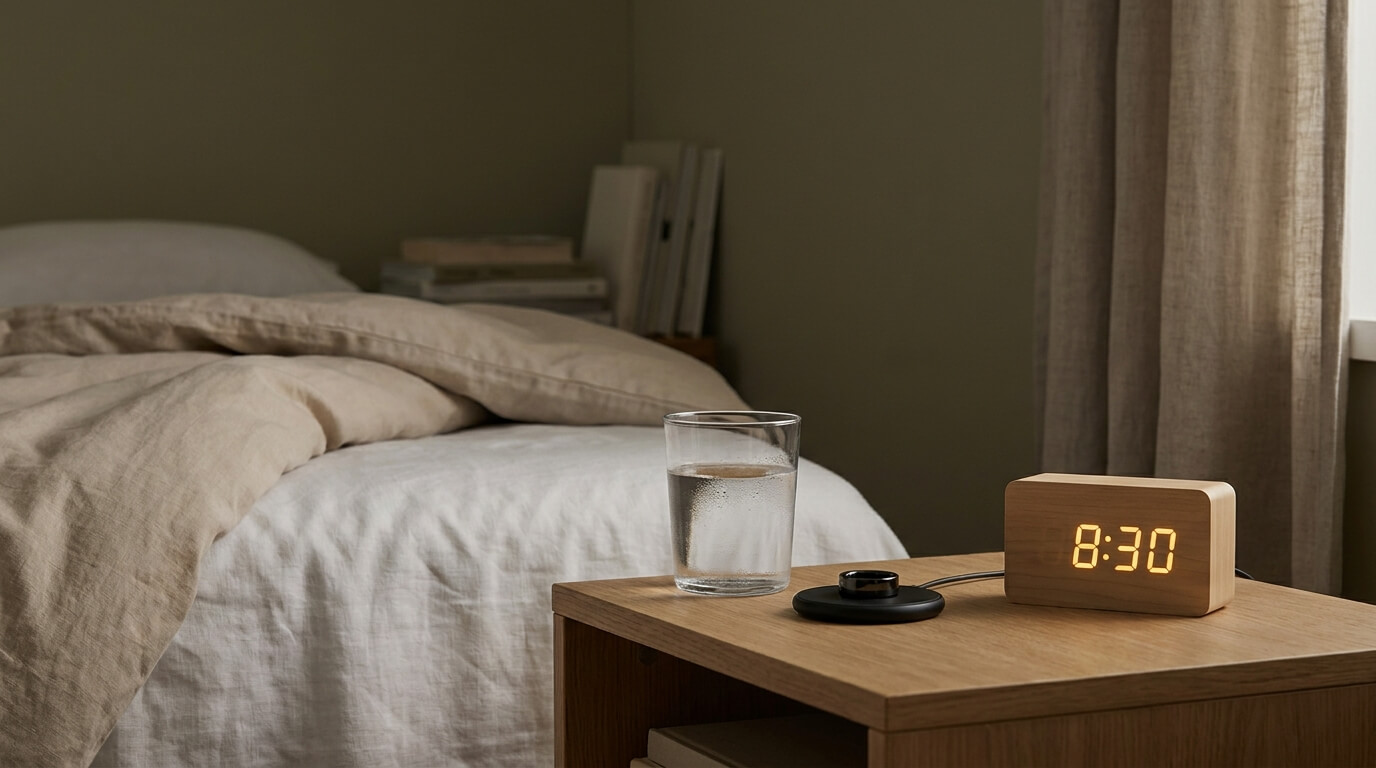
His protocol, in its strictest form: in bed at 8:30pm, every night, no exceptions. He has said he won’t trade it for dinners, events, or travel convenience. He wakes around 5am without an alarm, finishes his last meal by late morning so digestion doesn’t touch his sleep window, drinks no alcohol, and starts winding down about an hour before bed with dimmed lights and no screens. The results he publishes are the famous part: months-long streaks of 100% sleep scores on Whoop, which he holds up as evidence that sleep is a skill you can train rather than a lottery you enter each night.
| Source | Reported sleep protocol |
|---|---|
| Blueprint protocol (self-published) | In bed 8:30pm sharp; wakes ~5am with no alarm |
| Whoop data shared on his X account | Months-long streaks of 100% sleep scores |
Why does Bryan Johnson’s sleep protocol get so much attention?
Because it’s the most extreme public answer to a question everyone quietly asks: what would happen if I actually took sleep seriously? Johnson spends a reported $2 million a year on Blueprint, his anti-aging program, and got a Netflix documentary out of it. The sleep piece travels furthest, though, because it’s the one part anyone can copy for free. The contrast with everyone else in the routine-optimization world helps too. Andrew Huberman optimizes sleep with morning sunlight and consistent wake times but still keeps a normal social life. Lex Fridman aims for eight and drifts. Johnson deleted the drift entirely, and tracks outcomes down to nighttime erections as a data point. People pay attention for the same reason they watch speedruns: it’s the theoretical maximum, performed live.
What Bryan Johnson’s sleep protocol says about remote developer habits and productivity

The awkward part, for remote developers especially, is that Johnson’s protocol is mostly things you already know: a consistent bedtime, morning light, no late food or alcohol, no screens at the end of the night. He didn’t discover new science. He removed every exception, and the perfect scores followed. That’s the real lesson for anyone whose evenings dissolve into one more pull request. Johnson knows the same things we know; he just enforces them, and enforcement is a systems problem. He treats sleep the way a good engineer treats uptime: fixed inputs, measured outputs, alarms on regressions. A normal-person version looks like a consistent shutdown time, the same morning routine on weekends as on weekdays, and some form of habit tracking so the streak exists somewhere outside your head. Skip the supplement stack and the sleep lab. The part worth stealing is the boring one: the same bedtime showing up in the log, night after night.
FAQ
Is Bryan Johnson’s sleep protocol officially confirmed?
As confirmed as self-experimentation gets. Johnson posts his sleep scores, protocols, and lab markers publicly, much of it on X, and his methods are documented in Blueprint for anyone to audit. The caveat: it’s still self-reported data from consumer wearables, not a controlled study. The streaks are real Whoop scores; what they prove is argued about constantly.
How does Bryan Johnson compare to others in remote developer habits and productivity?
He’s the far end of the spectrum. Matthew Walker, the sleep scientist, advocates roughly eight hours but lives like a regular person; Elon Musk runs on six and treats it as a cost of ambition. Johnson out-sleeps both, at least on paper. For developers he’s not a template so much as a proof: sleep responds to consistency faster than almost anything else you can measure.
Does habit tracking actually make a difference for a sleep protocol?
Get the Developer Habit Toolkit.
A free Notion template, 30-day challenge, and habit stacking guide — built for devs. Enter your email and we'll send it over.
No spam, unsubscribe anytime.